Langtang Valley Trek: A Thoughtful Route to Kyanjin
Plan the Langtang Valley around a gradual village sequence, time at Kyanjin and a viewpoint that fits the conditions and your energy.
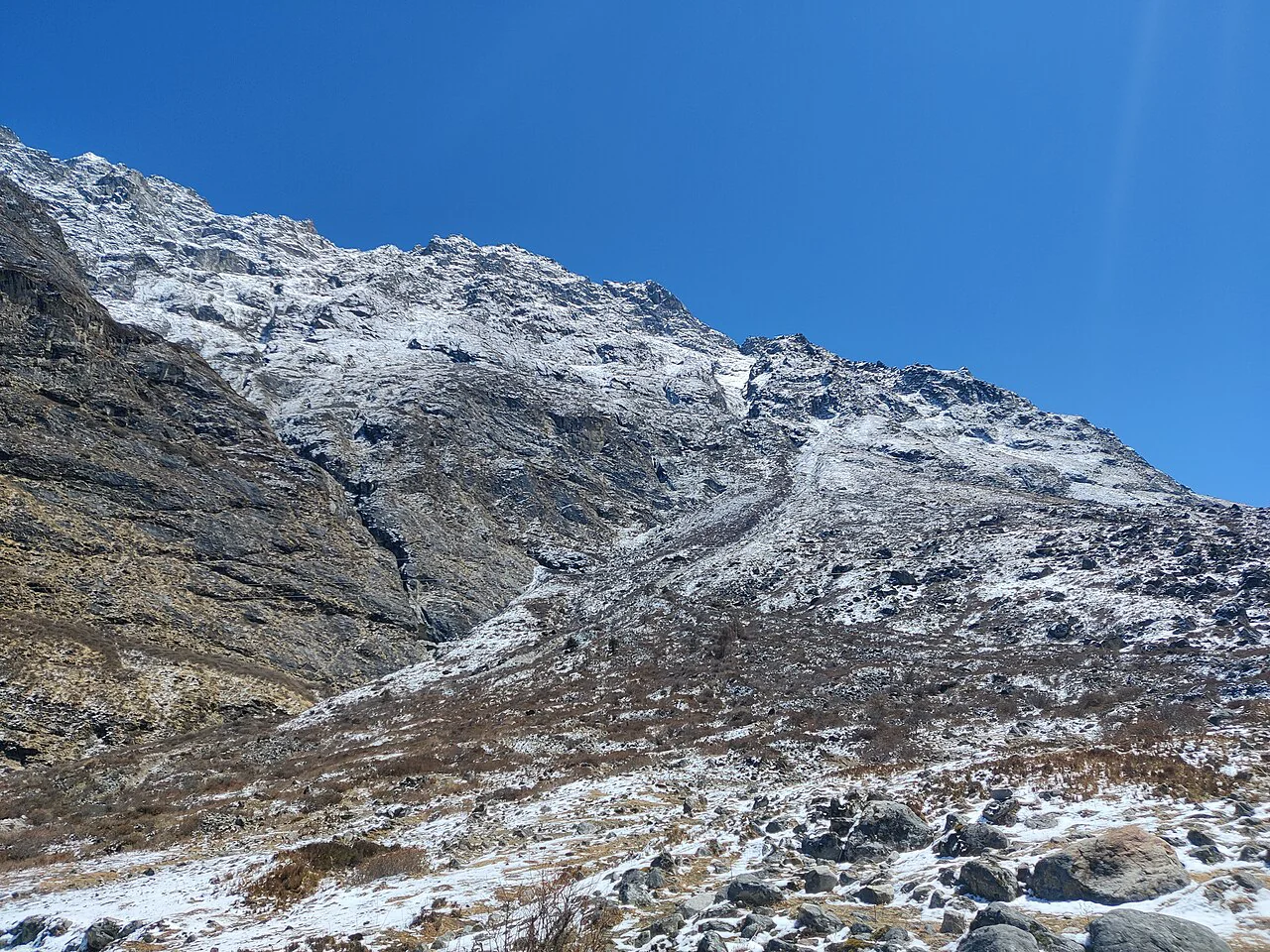
The Langtang Valley trek is a road-accessed Himalayan journey north of Kathmandu, with Kyanjin Gompa as its main upper-valley base. A ten-day plan can include city arrival, travel, a more gradual valley ascent and a flexible viewpoint day. It does not need a domestic mountain flight, but it still needs time for road disruption and careful decisions above 3,000 metres.
Our 10-day Langtang Valley itinerary divides the ascent through the lower valley and Langtang village before Kyanjin. The highest optional walk is kept separate from the highest overnight, so you can choose a lower activity without losing the heart of the journey.
What kind of trek is Langtang?
The route follows a mountain valley through forest, settlements and more open upper-country landscapes. It is a good match for people interested in village surroundings as well as mountain viewpoints. There is no compulsory high-pass crossing on the standard valley return route.
That makes it different from a traverse linking Langtang to other regions. Adding Gosaikunda, Ganja La or another extension changes the walking demands, time and sometimes the equipment required. Ask for a separate route description instead of assuming these are interchangeable variations of the same ten days.
NTB describes Langtang National Park as a trekking area with lodges and teahouses, accessed from the Dhunche side. Its cultural and natural setting is part of the attraction; wildlife sightings and access to individual community spaces should never be promised.
Road access deserves a full day
Common approaches are associated with Syabrubesi and Thulo Syabru, but the practical starting point can change with road and trail conditions. Nepal Hiking Team’s current Langtang itinerary uses Thulo Syabru. That is a useful reminder to confirm a current roadhead instead of copying an older map into a booking.
A drive from Kathmandu commonly occupies most of a day. Traffic, road repairs and weather can lengthen it substantially. Choose the transport basis explicitly and avoid scheduling a demanding walk immediately after an uncertain late arrival.
The return deserves the same respect. Keep an onward-flight buffer outside the minimum walking schedule. If you need to be back for a fixed international departure, say so before the itinerary is designed.
A ten-day framework with a slower valley ascent
The following is a planning structure, not a daily operating guarantee. Overnight elevations vary slightly between lodges and mapping sources.
| Day | Main plan | Overnight |
|---|---|---|
| 1 | Arrive and prepare | Kathmandu |
| 2 | Road journey to the agreed trailhead | Thulo Syabru or agreed access village |
| 3 | Forest and river-valley walking | Lama Hotel area, about 2,480 m |
| 4 | A shorter upper-forest stage | Ghodatabela area, about 3,030 m |
| 5 | Continue through the valley | Langtang village, about 3,430 m |
| 6 | Walk to the upper-valley base | Kyanjin, about 3,870 m |
| 7 | Flexible local or viewpoint walk | Kyanjin again |
| 8 | Descend through the valley | Lama Hotel area |
| 9 | Return to the agreed roadhead | Trailhead village |
| 10 | Drive to Kathmandu | Kathmandu / onward arrangements |
The lower-valley lodging plan needs confirmation when you book. If a proposed intermediate lodge is unavailable, the answer should be a revised schedule with adequate time, not silently combining the climb into one long day.
Kyanjin Ri is not a single fixed outing
Ask which viewpoint is intended. A lower Kyanjin Ri objective around 4,300 metres is different from the higher summit commonly described around 4,770 metres. Tserko Ri is another, longer high-altitude day near 5,000 metres. They should not all be listed as automatic activities on the same afternoon.
A useful Kyanjin day has a choice: a gentle local walk, a lower viewpoint, or a longer objective only when conditions and acclimatization support it. The main overnight remains in Kyanjin. You should know the turnaround time, expected effort and lower alternative before leaving the lodge.
If photography is important, discuss daylight and walking priorities rather than simply requesting the highest hill. A comfortable morning at a lower viewpoint can be more rewarding than a hurried climb followed by an exhausted descent.
Difficulty and altitude
Expect sustained uphill walking on the way in and long descents on the way out. Forest paths, steps and uneven ground mean that the valley’s straightforward map line does not translate into uniform effort. Train with consecutive hill walks and include descents using your actual footwear.
Langtang also rises quickly if stages are combined. CDC guidance recommends gradual ascent. Tell your guide about symptoms promptly; do not move higher while unwell. Discuss personal medical questions with a clinician before departure, especially if you have a history of altitude problems.
A rest night is useful only if it remains available when needed. Avoid buying an itinerary whose success depends on every member walking at the fastest advertised pace.
A respectful visit to a living valley
Langtang is a home and working landscape. Ask before photographing people, entering a monastery or stepping into a private courtyard. Keep a respectful distance from livestock and make space for loaded animals on the trail.
The valley’s experience of the 2015 earthquake is not a sightseeing performance. Follow local guidance around memorial places and listen if residents choose to share their stories. Small choices—buying locally, reducing litter and being considerate in lodges—are more useful than treating the community as a backdrop.
Seasons, lodging and food
NTB identifies spring and autumn as principal visiting periods for Langtang, while noting monsoon and winter conditions. A particular departure still needs a current assessment of road access, snow and lodging. Clear mountain mornings cannot be guaranteed by choosing a popular month.
Lodges are practical trail accommodation. Confirm the expected room basis, bathrooms, bedding and charging arrangements. Do not assume a city-hotel standard applies throughout the valley. If you need privacy or have a dietary restriction, make it part of the proposal rather than a request made at the final village.
Carry personal snacks and use a reliable drinking-water treatment plan. Ask which meals are included, how extra drinks are handled and whether additional nights caused by weather are separately charged.
Permits and preparation
Check the official park-entry schedule and NTB’s Langtang guide/TIMS listing before arranging the trip. Your quote should identify the documents and charges that apply to your nationality and route.
Pack waterproof layers, warm evening clothing, tested shoes, a headlamp, sun protection, water treatment and personal medicines. Check insurance against the highest intended viewpoint, not just the village where you sleep. Confirm porter baggage limits and keep your daytime essentials with you.
Before you make a decision
Ask for the current roadhead, the intermediate overnight before Langtang village, the exact Kyanjin viewpoint and the road-return buffer. These answers reveal more about the trip than a generic “moderate difficulty” label.
If you want a longer pass-crossing journey, compare Manaslu. If you want a shorter lower trek, consider Poon Hill. Send your available days and previous walking experience for a Langtang proposal with a clear route, service basis and flexible upper-valley day.
Sources & further reading
Travel information checked on 25 October 2026. Rules, fees and operations can change; check the linked authority again before you travel.
Let’s plan your Nepal journey.
Choose an itinerary or tell us what you have in mind.