Annapurna Base Camp from Pokhara: How to Plan the Trek
Plan an Annapurna Sanctuary trek around the walking days, overnight elevations and road transfers that actually fit your time in Pokhara.
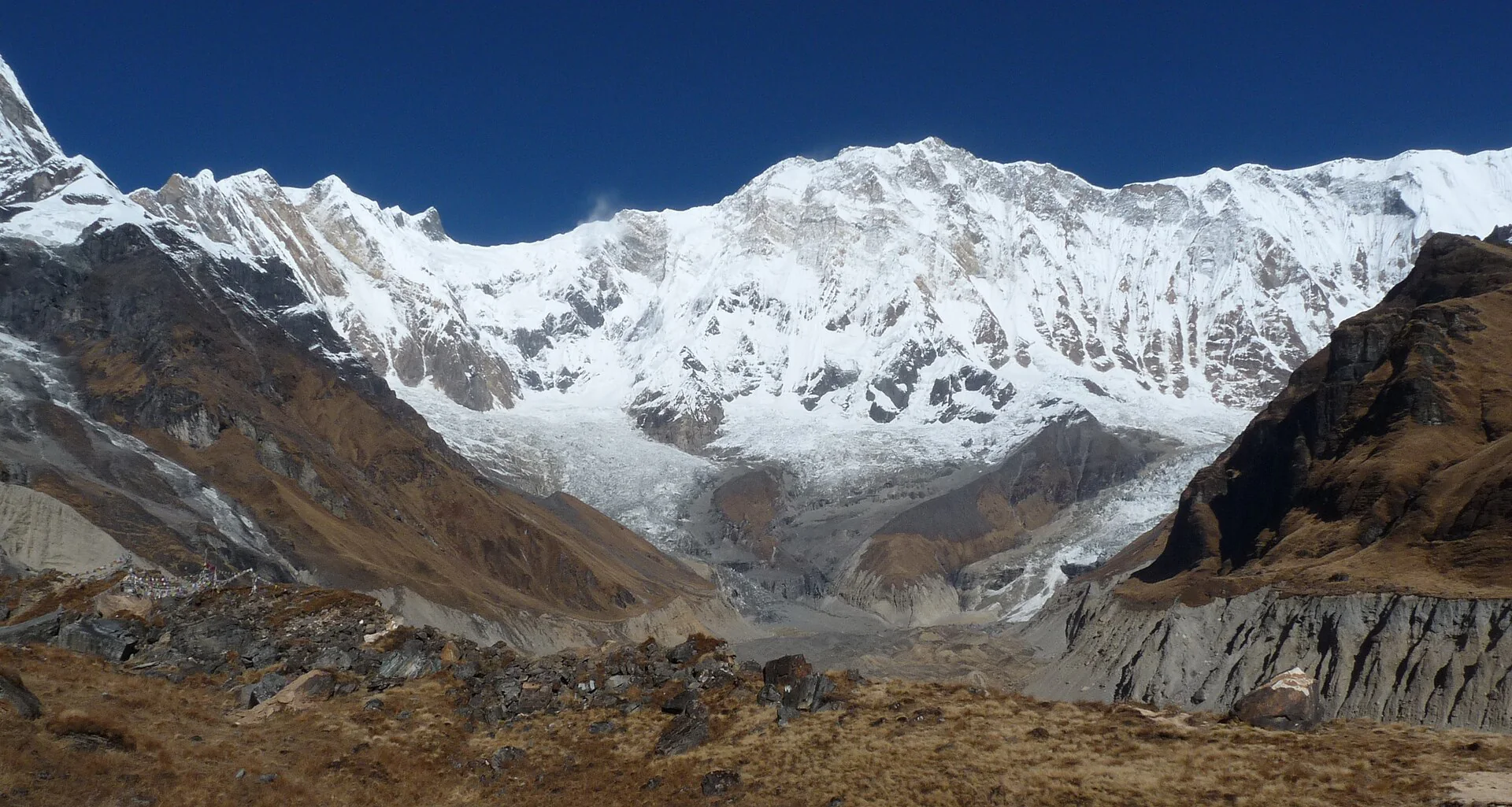
Annapurna Base Camp is a mountain trek from the Pokhara area into the Annapurna Sanctuary, reaching approximately 4,130 metres. For a first visit, allow roughly eight to ten trail-and-transfer days from Pokhara, then add travel to Nepal and disruption time. A shorter advertised schedule may use a different roadhead, skip village stages or make larger daily climbs. Compare the overnight stops before comparing the number of days.
Our 12-day Annapurna Base Camp journey includes Kathmandu and Pokhara travel. If you are already in Pokhara, tell us: your proposal can start there without adding city transfers you do not need.
What makes this route different?
The trail follows a valley into a bowl of high mountains rather than crossing a high pass. Villages, terraced slopes and forest give way to a colder, more open upper valley. You return along much of the same corridor, so walking downhill is part of the experience, not a quick transfer after the main viewpoint.
ABC is a good match if you want several days of walking and a close mountain setting without committing to the length of the Annapurna Circuit. It still asks for strong legs, repeated stairs and careful pacing. The label “moderate” should not hide the cumulative effort of descending to a river and climbing out again.
Start with the roadhead, not the headline duration
Ask exactly where your vehicle stops and where walking starts. Ghandruk, Jhinu-area access and older Nayapul approaches produce different first days. Road conditions can move the practical handover point, and a line on an itinerary should not promise a jeep will reach a particular bridge in every season.
A Ghandruk approach gives the trip a village beginning. A more direct road connection may suit a shorter visit, but saving low-altitude days should not automatically remove time higher in the sanctuary. Keep those two decisions separate when discussing a route.
| Planning decision | What to confirm |
|---|---|
| Starting point | Pokhara hotel, meeting location and roadhead |
| First walking day | Transfer time plus actual walking time |
| Upper-valley pace | Where you sleep before and after Deurali |
| Return | Trail endpoint, vehicle connection and Pokhara arrival |
| Extra time | What happens if a road, lodge or trail section is unavailable |
A useful walking framework
A considered itinerary can use the following sequence. These are planning stages, not guaranteed operating dates or reserved lodges. Altitudes are approximate and walking times exclude long meal stops.
| Stage | Typical overnight | Walking to plan around |
|---|---|---|
| Pokhara transfer and village approach | Ghandruk, about 1,940 m | 2–4 hours after the transfer |
| Foothill trail | Chhomrong, about 2,170 m | 5–6 hours |
| River steps and forest | Bamboo, about 2,310 m | 5–6 hours |
| Forest and upper valley | Himalaya, about 2,920 m | 3–4 hours |
| Shorter ascent | Deurali, about 3,230 m | 2–3 hours |
| Enter the sanctuary | Machhapuchhre Base Camp, about 3,700 m | 3–4 hours |
| ABC visit, then descend | Deurali or a lower agreed stop | 6–8 hours |
| Continue down-valley | Chhomrong | 7–9 hours |
| Walk to road access and return | Pokhara | 2–4 hours walking plus transfer |
Visiting ABC from Machhapuchhre Base Camp and returning lower keeps the highest visit separate from the highest overnight. An ABC overnight is a different choice, with different sleeping altitude and cold exposure. Nepal Hiking Team’s published route provides a useful regional benchmark; our proposal should spell out which version you are considering.
How hard is Annapurna Base Camp?
The major practical test is maintaining a comfortable walking rhythm for consecutive days. Train on hills or stairs with the pack and footwear you expect to use. Include descents, because knees often notice those more than uphill breathing. A single fast gym session is less useful preparation than repeated walks that let you learn how your feet and shoulders respond.
Above the forest, cold, altitude and a narrower weather window change the day. Tell your guide promptly if you feel unwell. Do not climb higher with altitude symptoms; worsening symptoms require descent and help. Read the CDC altitude guidance before choosing your pace, and discuss personal health questions with a clinician.
The Deurali–sanctuary corridor also needs a current trail assessment. Snow, avalanche exposure, heavy rain and damage can prevent access. An early start is not a substitute for a safe route. A worthwhile proposal explains the turnaround decision and the lower alternative, rather than promising ABC whatever the conditions.
When should you go?
Spring and autumn are common planning windows. Spring may combine warmer walking with changing cloud cover; autumn often brings clearer mountain mornings but busy lodges. These are seasonal patterns, not a forecast for your dates. Ask about the particular month, snow remaining on the upper trail and whether the road approach is operating normally.
Winter can mean quiet lower trails but cold rooms and blocked upper sections. Monsoon travel adds wet steps, poor visibility and difficult road conditions. If your dates are fixed in a less predictable period, discuss a lower Annapurna route as a real alternative before paying for transport.
Permits and arrangements
NTNC lists ABC within the Annapurna Conservation Area. Check entry requirements for your nationality and route. NTB lists guide/TIMS requirements for Poon Hill–ABC; confirm current issuance before travel.
Ask for a written list of permits and charges in your quote. Do not assume a permit application, a guide, a porter and transport are all included because a page describes the route. Keep your passport details consistent across documents and carry the issued permits as instructed.
What are lodges and meals like?
Expect practical trail accommodation rather than city hotel facilities. Room layouts, bathroom access, charging and hot-water arrangements vary by village and season. A lodge name in a sample itinerary is not proof of a booking. If you need a private room or have a particular accessibility requirement, raise it before choosing dates.
Discuss dietary needs in concrete terms: ingredients you must avoid, cross-contamination concerns and food you can reliably eat. Carry useful snacks without assuming they replace meals. Drinking water needs a dependable treatment plan, and charging a phone may be a separately priced service.
Packing that earns its place
- Worn-in footwear and socks you have tested on long descents.
- A waterproof shell and layers you can remove while climbing.
- Warm evening clothing, gloves and a hat for the sanctuary.
- A headlamp, spare power and sun protection.
- Refillable bottles and an agreed water-treatment method.
- Personal medicines, a small blister kit and insurance information.
- Trekking poles if they help your balance on stairs.
Confirm whether a sleeping bag or other equipment is supplied before leaving it at home. Ask how porter baggage, if requested, is limited and transported. Keep essentials with you during the walking day.
Questions to settle before booking
Request the daily sleeping elevations, the ABC visit or overnight plan, the transport type, the meal basis and the response to a missed connection. Check whether insurance covers the intended altitude and activity; an evacuation arrangement is not a guarantee that a helicopter can fly.
If you prefer a lower viewpoint trek, compare Ghorepani Poon Hill. For a ridge route, read the Mardi Himal guide. To plan ABC, send your Pokhara dates, group size and walking experience. We can then discuss a route and provide a written quote with the services clearly identified.
Sources & further reading
Travel information checked on 25 October 2026. Rules, fees and operations can change; check the linked authority again before you travel.
Let’s plan your Nepal journey.
Choose an itinerary or tell us what you have in mind.