Annapurna Circuit and Tilicho Lake: Choosing the Right Route
Understand where Tilicho fits into the Annapurna Circuit, how the extension changes your ascent and why Thorong La deserves its own weather margin.
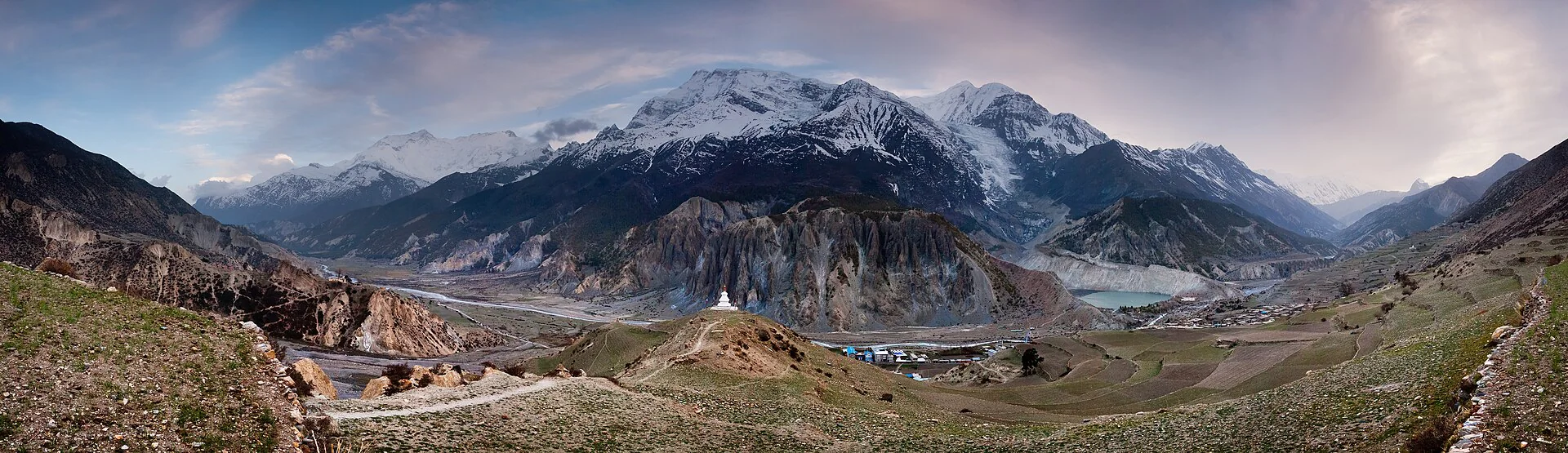
The Annapurna Circuit and Tilicho Lake can be combined, but Tilicho is a separate high-altitude extension, not a short stop beside the main trail. The circuit crosses Thorong La at approximately 5,416 metres; the lake excursion reaches roughly 4,919 metres before you return toward the pass approach. Allow additional walking and contingency days for the lake instead of squeezing it into a circuit itinerary unchanged.
Our 15-day Annapurna Circuit follows the main route without Tilicho. If the lake matters to you, ask for an extended itinerary with its own accommodation, acclimatization and weather plan.
Circuit, lake extension or another Annapurna trek?
Choose the circuit for a journey between two different valleys, a long high-pass day and the changing settlements around Manang and Mustang. Choose the Tilicho extension because you specifically want that additional mountain landscape and can accept a more exposed approach and a larger time commitment.
Neither route is a substitute for Annapurna Base Camp. ABC enters the sanctuary from the Pokhara side; it does not cross Thorong La. Confusing the names can lead to booking the wrong fitness level, transport plan or insurance limit.
| Route | Main high point | Planning consequence |
|---|---|---|
| Main Annapurna Circuit | Thorong La, about 5,416 m | Preserve acclimatization and pass-weather time |
| Circuit with Tilicho | Lake near 4,919 m, then Thorong La | Add a separate approach, excursion and return |
| Annapurna Base Camp | ABC, about 4,130 m | Different valley, road access and walking pattern |
Where the route begins now
Road access has shortened some traditional approaches, but a transfer ending higher does not remove the need to adjust to altitude. Discuss whether walking starts near Dharapani, Chame or somewhere lower, and why that start fits your previous nights. Long vehicle days can be tiring even when the distance looks modest.
A start near Dharapani provides walking before the upper Manang valley. The later stages can include Chame, Pisang, an upper-village route or the lower valley, Manang and the pass approach. The upper trail through Ghyaru and Ngawal is attractive, but it adds climbing and should be selected for your pace rather than treated as a mandatory scenic detour.
Ask for a road-and-trail map showing where vehicles are used. “Classic circuit” can describe substantially different itineraries, especially after Muktinath. Some walk toward Jomsom, others drive farther down the Kali Gandaki valley, and some include an additional foothill trek.
Build the ascent before adding Tilicho
Manang is a useful place to pause and review how you are feeling before sleeping higher. An acclimatization day should have a flexible walk, not a strenuous summit obligation. The right choice might be a village stroll and rest rather than the highest viewpoint available.
CDC guidance stresses gradual increases in sleeping altitude. Fitness does not replace acclimatization. If symptoms appear, do not keep climbing to preserve a booking. The itinerary needs room for a changed overnight or a descent.
For the main circuit, a sequence through Yak Kharka, Ledar and Thorong Phedi can divide the upper approach into manageable stages. The pass itself is still a substantial ascent followed by a long descent. Sleeping at High Camp and starting from Phedi are different plans; ask for the actual overnight elevation rather than only the pass height.
What the Tilicho extension adds
From Manang, the lake route turns toward Khangsar and the Siri Kharka area before Tilicho Base Camp. The approach includes loose slopes and exposed traverses. The lake visit is usually an out-and-back from the base-camp area, followed by a return toward the circuit. It is not the same as crossing a remote pass beyond the lake.
| Part of the extension | Question to settle |
|---|---|
| Leaving Manang | Is an acclimatization night retained? |
| Khangsar / Siri Kharka | Which lodge and sleeping elevation are planned? |
| Base-camp approach | What is the current condition of exposed sections? |
| Lake excursion | What is the turnaround time and lower alternative? |
| Rejoining the circuit | How much recovery is allowed before Thorong La? |
Nepal Hiking Team’s Tilicho itinerary confirms the separate Khangsar–Siri Kharka–base-camp approach and lake excursion. Treat its route as a benchmark, not as a promise that every advertised stage is suitable for every traveler.
The pass day deserves its own decision
Thorong La is not a road summit reached after breakfast. Expect an early start, cold conditions, reduced pace at altitude and a long descent toward Muktinath. Walking times depend heavily on weather, snow and the group; a proposal should give a range and identify where the night begins and ends.
The decision to cross belongs to the conditions on the day. A forecast, lodge booking or onward flight should not create pressure to continue. Ask what happens if you need another night below the pass, and what a retreat down the Manang side would mean for transport and cost.
For that reason, do not schedule an inflexible international connection immediately after the anticipated return from Jomsom or Pokhara. A road alternative is useful to discuss, but it also takes time and depends on road access.
Best planning seasons
Spring and autumn are the usual periods to investigate first. High passes can receive snow in either season, so the calendar alone cannot establish that Thorong La or the Tilicho approach is open. Winter adds cold and snow constraints; monsoon conditions can affect lower roads and exposed slopes even when a high valley seems comparatively dry.
Ask about your actual dates, not just “the best season.” Early spring and late autumn can require different equipment and margins from the centre of a season. If your available days are too few to absorb disruption, the sensible change may be a different trek rather than a faster circuit.
Permits and local requirements
NTNC places the circuit and Tilicho within ACAP. NTB lists guide/TIMS requirements for these Annapurna routes. Confirm current paperwork, nationality-specific charges and the precise route before travel.
Do not assume that adding Nar Phu or another side valley uses the same permissions. A new extension should trigger a new route and permit check, even if it looks close on a map. Your written proposal should identify every planned area and any separate authorization.
Compare the quote as carefully as the route
A useful quote distinguishes transport to the trailhead, post-trek travel, lodge accommodation, meals, guiding, porter arrangements, permits and personal expenses. Ask how group-price tiers work and whether a single room is available at the locations where you want one.
Check the equipment list against the highest day and overnight, including warm gloves, headlamp, waterproof layers and suitable footwear. Discuss traction equipment if conditions call for it; carrying equipment without knowing when or how to use it is not a complete plan. Confirm that your insurance covers the intended route, altitude and rescue process.
Decide what matters most
If the pass crossing and village journey are your priorities, keep the main circuit spacious. If Tilicho is essential, add days and accept that the lake can still be turned back by weather. If you mainly want mountain views with less time at altitude, compare the Poon Hill guide.
Tell us your available dates and previous high-altitude experience. We will discuss the main circuit or an extended Tilicho plan, with the overnight sequence and service basis visible before you decide.
Sources & further reading
Travel information checked on 25 October 2026. Rules, fees and operations can change; check the linked authority again before you travel.
Let’s plan your Nepal journey.
Choose an itinerary or tell us what you have in mind.